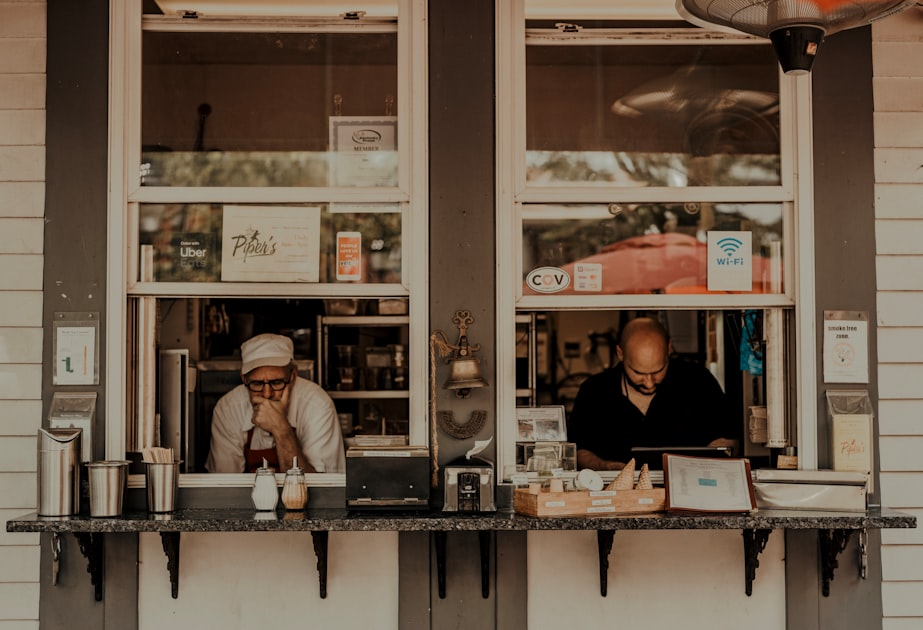
The first 90 days after opening a restaurant are unlike any other period in the life of the business.
Word of mouth is starting to form but has not found its shape yet. Your reputation is being built in real time. You are simultaneously learning how to run the operation, fixing what is not working, and trying to bring in enough customers to keep the lights on while you do all of the above.
It is an enormous amount to manage, and marketing often falls to the bottom of the list. The kitchen needs attention. The staff need training. The systems are not yet smooth. By the time the evening is over, writing an email to a list you do not have yet or posting on Instagram about a restaurant that nobody is following feels like the least pressing task.
This is the wrong way to think about it. The first 90 days are the best marketing window you will ever have for your restaurant. Novelty drives curiosity. The opening of a new restaurant is a genuine local event for a certain kind of customer. The people who love discovering new places are specifically looking for you right now. The habits and relationships you build in this window compound into the long-term character of your customer base.
This article covers what to do with that window, in the right order, without wasting effort on channels that will not work for a brand-new restaurant with no audience.
Before You Open: The Work That Happens First
The most effective marketing during the first 90 days starts before the doors open. Not weeks before. Days, at least. But ideally a few weeks earlier if you have the time.
Get your Google Business Profile live and fully completed.
Before a single customer sets foot in your restaurant, anyone who searches for a restaurant in your area on Google should be able to find you. A Google Business Profile costs nothing, appears in local search results and on Google Maps, and is the single most important piece of digital infrastructure an independent restaurant can have.
Create the profile, verify it with Google’s process, and fill in every field: name, address, phone number, hours, website if you have one, category, and photos. Add at least five to ten photos before you open: the dining room, the bar if you have one, the front of the building, a couple of dishes if they are ready to photograph. An empty profile looks like an abandoned project. A complete one looks like a real business that is ready for customers.
Set up your email marketing tool and sign-up form.
You may have zero subscribers on opening day. That is fine. Having the infrastructure in place from day one means you start collecting email addresses from your very first customers rather than trying to retrofit a system six months later when the opening buzz has passed.
Create a free account with Brevo or Mailchimp, build a simple two-field sign-up form, generate a QR code that links to it, and print cards to go on every table. The previous articles in this series cover each of these steps in detail. The point here is timing: set it up before you open, not after.
Tell your personal network specifically and directly.
Everyone who knows you personally and who lives within reasonable distance of your restaurant should hear about your opening from you directly, not from a social media post they may or may not see. Send personal messages. Text your friends. Email people you know who are food-curious. Tell them where you are, what you are doing, and when you are opening.
Ask them to come in the first week or two and to tell anyone they know who would enjoy it. A personal ask from someone they know converts at a far higher rate than a social media post, and the first customers through your door matter more than any other. They are forming the first impressions and the first stories.
Week One and Two: Get People in the Door
The goal of the first two weeks is simple: fill the restaurant, learn what works, and start collecting email addresses from every customer who comes in.
Accept that the first week will be slightly chaotic and use it.
Your team is new to the service. Your kitchen is calibrating. Things will go slightly wrong. The customers who come in the first week know this and most of them are forgiving. What they remember is whether the people running the restaurant seemed to care.
Be visible. Talk to tables if you are the owner. Acknowledge when something is not perfect. The authenticity of a new restaurant still finding its pace is part of the appeal for the customers who specifically seek out openings. Lean into it rather than trying to project a polished perfection you have not yet earned.
Ask every satisfied customer to leave a Google review.
This is the most important single action of the first 90 days for your long-term search visibility. A restaurant with 40 Google reviews after its first month looks dramatically more established than one with 4. The reviews compound: more reviews mean better Google ranking, better ranking means more new customers, more new customers means more potential reviews.
The ask is the same as described in the previous articles: natural, brief, at the end of a clearly positive experience. “If you enjoyed tonight, it would mean a lot to us if you left us a review on Google. It genuinely helps a new restaurant get discovered. The QR code on the table links straight to it.” A QR code card on every table with one side linking to your email sign-up and the other linking to your Google review page covers both collection mechanisms simultaneously.
Collect email addresses from day one.
Your QR code cards are on every table. Your team knows to mention the mailing list to happy customers. The paper sign-up sheet is a backup on every table. The receipt has the sign-up prompt on it.
You may get 3 to 5 subscribers from the first week. This feels like nothing. It is not nothing. These are your very first subscribers: people who were curious enough about a brand-new restaurant to sign up before it had any reputation. They are almost certainly genuine food enthusiasts and local discoverers. They are exactly who you want on your list.
Weeks Three to Six: Build Visibility in Your Community
Once the first wave of curiosity customers has come through and the operation is running more smoothly, the focus shifts to systematic visibility in the community around you.
Local press and bloggers.
Many cities and towns have local food bloggers, restaurant reviewers, or community newsletter writers who specifically cover new openings. Identify three to five of them. Send a personal email, not a press release, introducing yourself and your restaurant. Tell them who you are, what you are doing, and why your restaurant is worth visiting. Invite them in for a meal, no strings attached.
A single piece of coverage from a respected local food writer produces more bookings than a month of Instagram posts for a new restaurant, because it reaches people who specifically follow that writer for new restaurant recommendations. It costs you a meal and the time to write a brief personal email.
Local partnerships.
Identify businesses near your restaurant whose customers overlap with yours. A wine shop. A specialty food supplier. A local theatre or art gallery. A bookshop. Introduce yourself. Propose a small partnership: a recommendation card in each other’s windows, a combined offer, a social media mention from both sides. These arrangements cost nothing and create visibility in a network of customers who are already engaged with their neighborhood.
Your neighborhood, physically.
If your restaurant is in a residential or mixed-use area, be a visible and positive presence in it. Introduce yourself to neighboring businesses. Attend any local business association meetings or events. Hand out a small card with your details to people who are clearly regulars in the area. These physical, in-person connections build a local reputation faster than any digital channel for a brand-new business with no audience yet.
Weeks Six to Ten: Send Your First Email and Start the Communication Habit
By week six, you should have 30 to 60 email subscribers. This is enough to send your first email.
Write and send your first email.
The article in this series on what to write in your first restaurant email covers this in detail, including a complete template. The short version for a new restaurant: introduce yourself properly, tell the story of why you opened this restaurant and what it is about, give subscribers one piece of immediate value (a recipe, a behind-the-scenes note about the kitchen, a recommendation in the neighborhood), and end with a gentle invitation to come in or to forward the email to someone who would enjoy it.
Do not wait until the list is bigger. The habit of communicating with your list starts with this first email. Send it.
Ask your first-month customers to tell one person.
At the end of your first month, you have served somewhere between a few hundred and a few thousand people depending on your size and pace. Not all of them will have signed up for your list. But most of them experienced the opening of a new restaurant, which is a story people tell.
A brief email to your list, or a note from staff to departing tables during this period, that specifically asks: “If you have enjoyed your time here, please tell one person who would love it” is a directed referral ask. It does not require an incentive. Most people who had a genuinely good experience at a new restaurant that clearly cares about what it does are happy to tell someone if they are specifically asked.
Weeks Ten to Thirteen: Evaluate, Fix, and Prepare for the Second Wave
The final part of the first 90 days is reflective. You are looking at what has worked, what has not, and what needs to change before you move into the steady-state operation of a restaurant past its opening period.
Look at your Google review count and score.
After 90 days, a restaurant with an active review-asking practice should have somewhere between 30 and 80 reviews. If you are significantly below this, your team is not making the ask consistently or something about your review collection method is not working. Fix it now, because the gap between 15 reviews and 60 reviews in your Google Business Profile has a real effect on how often new customers choose you over a competitor.
Look at your email list size.
After 90 days of consistent collection, a restaurant with regular foot traffic should have between 50 and 100 subscribers. If you are below 30, the ask is not being made consistently. Return to the email collection articles in this series and reset the team habit.
Review which marketing actions produced the most visible results.
Which week had your best covers? What happened that week that was different? Did a blogger post about you? Did you send an email to your list? Did a specific dish get shared by someone with an audience? Understanding which inputs produced which outputs at this early stage tells you where to concentrate energy in the months ahead.
Map your slow periods.
After 90 days you have enough operational data to know which evenings are consistently quieter than others. These are your targets for the weekday promotion strategy covered in the previous article. Build this into your communication calendar now rather than reacting to slow evenings as they happen.
What Not to Do in the First 90 Days
A few specific mistakes are common enough in new restaurant openings to be worth naming explicitly.
Do not spend heavily on paid advertising before you have any reviews.
A new restaurant with no reviews and a sparse Google Business Profile that runs paid search ads is spending money to send people to a profile that gives them no reason to choose you over the restaurant next door with 150 reviews. Build your review base first. Advertising amplifies an existing signal. It cannot create one from nothing.
Do not treat social media as your primary marketing channel.
Social media is valuable for a new restaurant as a discovery channel: people looking for new openings often check Instagram for recent posts and photos. But organic reach is low, follower growth is slow, and the effort required to produce consistent social content at opening time is disproportionate to the return. Use social media as a lightweight, authentic window into the restaurant rather than as a primary growth channel. Email, word of mouth, and Google reviews will do more.
Do not ignore negative feedback in the first 90 days.
A new restaurant receives more candid feedback in its first few months than at any other time. Staff members who are still learning service. Dishes that are not quite calibrated. A reservation system that has not yet smoothed out. Customers who experienced these rough edges are giving you information you need. Take it seriously. Fix what can be fixed. Follow up personally when someone had a clearly poor experience.
Do not stop asking once the opening rush has passed.
The energy of a new opening generates natural curiosity and natural conversation. Both of these fade after the first few weeks, and the systems that replace them, the email list, the review-asking habit, the staff briefings about regulars, need to be in place before the opening buzz ends. If you are only asking for reviews and email sign-ups during the excited first month and then stopping, you are losing the compounding benefit of consistent collection.
The Foundation You Are Building
Every action in this article is building toward the same thing: a restaurant that does not depend on foot traffic and luck to fill its tables.
By the end of 90 days, a restaurant that has executed this plan has the beginning of an email list, a meaningful review presence on Google, a few local relationships, and an operation that has been through its learning curve and is ready for steady-state growth.
These foundations compound. A list of 80 subscribers after 90 days becomes 200 after six months if the collection habit is maintained. A Google rating with 60 reviews after 90 days continues to attract new customers through search indefinitely. A relationship with a local food writer established in the first month can produce ongoing coverage.
The first 90 days are not the end of the marketing challenge. They are the establishment of the habits and infrastructure that make every subsequent month more productive than the one before.
Q&A
What is the most important marketing action for a restaurant in its first 90 days? Collecting Google reviews consistently from satisfied customers is the single highest-impact action for long-term discovery. A restaurant with 60 authentic reviews after its first three months will rank significantly better in local Google searches than a competitor with 10, and that ranking difference compounds over time. Close behind reviews is building an email list from day one, because the subscribers who join in the first 90 days are often your most engaged long-term advocates.
Should I open a social media account before my restaurant opens? Yes, but keep it lightweight. Post photos of the space, the menu, or behind-the-scenes preparation in the weeks before opening. This builds a small amount of anticipation with the specific audience of local food enthusiasts who follow accounts about their neighborhood. Do not over-invest in social media content at opening time when the operational demands are highest. A few genuine posts are more effective than a daily cadence that burns out quickly.
How many Google reviews should I aim for in the first 90 days? A realistic and meaningful target is 40 to 60 authentic reviews from genuine customers. This requires asking consistently, not aggressively, at the end of every service with every table that had a clearly positive experience. Restaurants that ask casually or occasionally typically have 10 to 20 reviews after 90 days. Those that make it a consistent habit achieve 40 to 70.
How do I get my first 50 email subscribers as a new restaurant? Your personal network first: send personal messages to everyone you know who lives within reasonable distance and ask them to sign up and tell others. Your opening week customers: place QR code cards on every table and have your team mention the mailing list to satisfied customers. Your social media followers: post directly asking followers to sign up with a specific reason to do so. At the end of the first month, most new restaurants that have followed these steps will have between 20 and 50 subscribers.
Should a new restaurant run paid advertising? Not in the first 90 days for most independent restaurants. Paid advertising works best when it amplifies an existing signal: a strong review profile, a compelling social media presence, a fully complete Google Business Profile. Without these foundations, ad spend sends people to a profile that cannot convert their curiosity into a visit. Build the organic foundation first. Use paid advertising to accelerate once it is in place.
How do I get local press coverage for a new restaurant opening? Identify local food writers, bloggers, and community newsletter editors who cover new openings in your area. Send each of them a personal email introducing yourself and your restaurant. Explain what makes your restaurant worth covering: your specific story, your approach to food, what is distinctive about what you are doing. Invite them in for a meal with no strings attached. Do not send a generic press release. A specific, personal message to the right person produces coverage. A generic email to a media list usually does not.
What should I do if my restaurant is getting negative reviews in the first 90 days? Respond to every negative review personally and promptly. Acknowledge the issue specifically rather than with a generic apology. Explain what you have done or are doing to address it. Invite the reviewer to return so you can make it right. This response is visible to every future potential customer who reads the review, and a thoughtful, genuine response to a negative review can actually build more trust than a string of uninterrupted five-star ratings.
How do I build word of mouth for a brand-new restaurant? Word of mouth is built through the quality of the experience and the specific, directed ask. Make sure every customer who had a good experience is asked, genuinely and briefly, to tell one person about it. Make the staff ask natural rather than scripted. Give satisfied customers something specific to say: “The lamb dish is only on for two more weeks” or “They are just opening and the early buzz is really deserved.” Specificity travels better than vague enthusiasm.
How important is the opening month for long-term restaurant success? Very important, but not in the way most people think. The opening month matters less because of the volume of customers it produces and more because of the habits and infrastructure it establishes. A restaurant that builds its email list, review collection, and community visibility from day one has a fundamentally different trajectory than one that starts these things six months in. The habits formed in the first 90 days tend to persist.
What is the right cadence for emailing my list during the first 90 days? One email is enough for the first 90 days if you are still building the list. Send it when you have at least 20 to 30 subscribers and have something genuinely interesting to say. The goal of this first email is to establish the communication habit and to deliver the welcome you promised when people signed up. From month four onward, a regular cadence of once or twice per month should be established and maintained.
How do I balance opening a restaurant operationally with doing marketing at the same time? Prioritize the marketing actions that compound over time and require minimal ongoing effort: completing your Google Business Profile, setting up your email sign-up infrastructure, and training your team to ask for reviews and email sign-ups as a natural part of service. These are one-time setup tasks that then run largely on autopilot. Avoid high-effort, low-return marketing activities like creating daily social media content or running paid campaigns until the operation is stable and the foundational marketing infrastructure is in place.